The heat warning covers a province. Heatstroke hits one person
The watch checks three things on the wrist itself: sustained heart rate, time spent in the sun and heat index. It alerts whoever has to stop before anything happens.
HR >120118 min in the sunheat index 36 °C
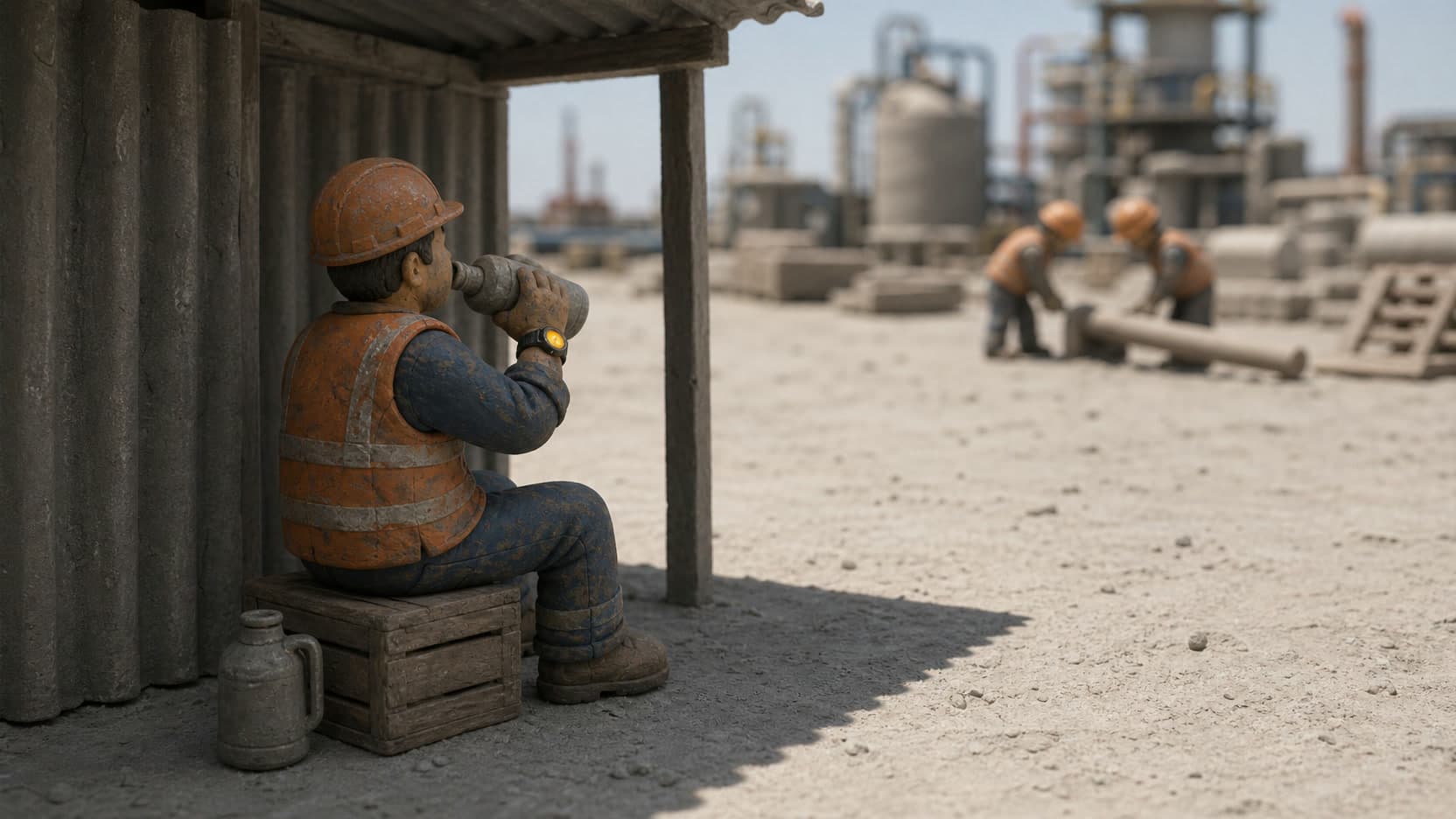
The rules no longer let you check a thermometer and decide
Royal Decree-Law 4/2023 amended Spain’s workplace regulations, Royal Decree 486/1997, and came into force on 13 May 2023. Since then, when AEMET, Spain’s state weather agency, issues an orange or red warning for extreme temperatures and the usual preventive measures are not enough, the employer must adapt working conditions, including reducing or changing working hours. That reduction cannot mean a cut in pay.
It covers outdoor work in any sector: construction, farming, transport, assembly. Indoors, the usual limits in Royal Decree 486/1997 still apply: 17 to 27 °C for sedentary work and 14 to 25 °C for light work.
What the regulation does not say, because it cannot, is when the measures stop being enough for a specific person. Someone has to make that call, and today they make it by looking at the sky and the thermometer in the gatehouse.
Four people on the same job are not equally exposed
A weather warning describes a province. A full stop protects everyone equally and halts the whole job, whatever it costs.
Between the two there is nothing, and that gap is where most of the summer happens.
The warning covers a province; the work spot is not
AEMET issues warnings by zone, and each zone covers large areas of Spain. On your site, someone standing on a concrete slab at midday and someone in a covered workshop share neither the temperature nor the glare off the ground.
Not everyone has spent the same hours in the sun
Someone who started at seven and has been on the same job since, and someone just back from lunch, are at the same temperature but not at the same risk. Exposure adds up, and the plant’s thermometer does not count it.
Not every body responds the same way
Acclimatisation, age, fitness or medication change how each person copes with the same working day. That is why a single rule for the whole workforce protects some people too much and others too little.
The effort is not in the weather report
Half an hour carrying loads in full sun is not half an hour standing in the shade. Sustained heart rate shows what the body is doing, and no warning shows that.
Three readings that only meet on the wrist
None of the three means much on its own. A heat index of 36 °C is not an alert; 118 minutes in the sun is not one either; a high heart rate, even less so. All three at once, in the same person, are.
The heat index is the same for the whole plant. The server calculates it from the temperature and humidity on your site. Minutes in the sun and heart rate belong to that one person and never leave the wrist: the watch does the combining itself. That is why only the alert leaves the wrist, not the vital signs.
What reaches the worker is not a beep but an instruction on what to do — stop in the shade and drink water — with the reason shown. And the worker taps to confirm, so the control room has a record that it arrived, not only that it was sent.
Roadmap
Being outdoors is not the same as being in the sun
The watch counts each person’s minutes in the sun; what it cannot yet tell is when they step out of it. The shade of a shed, a tank or a hut appears in no weather report, and four hours sheltered by the shed and four on the slab add up the same way.
What comes next is a shadow map of your plant, built on three things that already exist and need nothing installed.
The height of your structures is already measured
The LiDAR survey from the national aerial photography programme (PNOA), run by Spain’s National Geographic Institute (IGN), covers all of Spain. It is public and free. Sheds, tanks and huts, and the height of each, come from it. Nobody has to measure your plant, look for the drawings or install a sensor.
The sun’s position is calculated, not measured
With the plant’s coordinates and the time, the system works out the sun’s azimuth and elevation at each moment. With the elevation and each structure’s height, it gets the length of its shadow, and with the azimuth, the direction it falls on the site plan.
And an overcast day adds no exposure
Cloud cover comes from an open weather service. Without that step, the system would count sun at three in the afternoon on a grey day and would keep issuing alerts all winter, the quickest way to get them ignored.
The same worker, in the same spot, at three times of the same day. Only the shadow moves: the counter adds no sun in the first and counts it all in the other two.
With that, each person’s counter splits in two, minutes in the sun and minutes in shade, and the heat rule stops firing for being outside and starts firing for being exposed. The alert changes too: it can say where the nearest shade is, not just that shade should be found.
And it opens up no new data about anyone. Minutes in the sun are worked out from position, which the control room already has on the map, and from building heights. None of it comes from anyone’s body.
Even so, the control room does not see it all day. A person’s breakdown opens with their heat alert, while the alert lasts, and closes when it is resolved. That the data is not health data does not make it a record of where everyone has been.
In the mock-up you can already move the plant’s sun with a slider and watch the shadows sweep across the plan, using a simplified sun-position table and heights entered by hand. In the product, they come from the IGN’s LiDAR and real sun-position data.
Your vital signs are yours
It is the number one objection, and it always comes from the health and safety committee or the union representatives: a watch that measures your pulse knows how you are doing. That is why the architecture was designed the other way round from most.
The worker always sees their own vital signs on their wrist. The company does not: in normal operation the watch evaluates the health rules on the device itself and sends only the alert, so the vital signs never leave the wrist.
Only during an active emergency, an SOS or a detected fall, the response team sees that person’s vital signs, and only theirs, for as long as the alert lasts, with every access logged on the dashboard. Once it is resolved, transmission stops and the readings are hidden again.
The system does not record performance or rest times. A heat alert says that someone has to stop, not how long they have stopped for.
Location works the same way, and it is covered separately: Who sees where you are, when, and how it’s checked.
What this doesn’t do
Wrist sensors are for alerting, not for diagnosing. This is not a medical device. It does not say what is wrong with anyone, and it does not replace health surveillance or the health and safety service.
It does not decide for you either. It does not stop the job or shorten the working day. The decision to adapt working conditions still belongs to whoever has to make it. What changes is that they make it knowing who is close to the limit and since when, instead of going by the provincial warning.
For now it is deployed where there is no explosive atmosphere: building sites and assembly, workshops, warehouses, roads, open air. For classified areas, the route is ATEX zone 1/21 certified watches from specialist manufacturers, with the same Android system and the same app. The hardware changes; the software does not.
See it with your plant in front of you
In the mock-up you can trigger a heat stress alert and see both screens at once: what appears in the control room, and the instruction on the wrist of the person who has spent two hours in the sun.